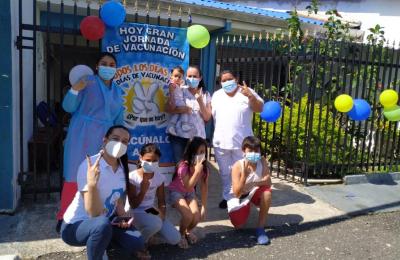






Political support and micro-planning as success factors in a high-quality follow-up vaccination campaign in Ecuador, 2023

Objective

To describe the results, achievements, and lessons learned through administrative coverage and rapid monitoring of a follow-up vaccination campaign, in the context of political prioritization and micro-planning as determining factors in the different stages of follow-up campaigns, and the application of these good practices to strengthen the National Immunization Program. 
Alcohol use, heavy episodic drinking, and associated cardiovascular risk in Guyana

Objective

To determine associations between demographic characteristics, alcohol use, heavy episodic drinking (HED), and cardiovascular risk factors using the 2016 Guyana World Health Organization (WHO) STEPwise noncommunicable diseases risk factor survey. 

Methods

A weighted sample was used in a secondary analysis of data obtained from an online database. Descriptive statistics, binary logistic regression, and linear regression models were applied to identify which subpopulations were at highest risk of HED or cardiovascular disease. 

Using data systems to conduct health research in the Caribbean: challenges during the COVID-19 pandemic

We aimed to assess how control measures during the coronavirus disease 2019 (COVID-19) pandemic affected the metabolic health of people with noncommunicable diseases when severe restrictions on movement and safety concerns prevented the use of traditional methods of health data collection. To identify study participants, we attempted to use hospital laboratory databases in Jamaica, Barbados, and Trinidad and Tobago.

Vaccine-associated poliomyelitis: safety of the oral poliovirus vaccine, Brazil, 2013–2023

Objective

To quantify the occurrence of vaccine-associated paralytic poliomyelitis (VAPP) cases in Brazil from January 2013 to May 2023. 

Methods

A descriptive study was conducted on VAPP cases reported as events supposedly attributable to vaccination or immunization (ESAVI) following oral poliovirus vaccine (OPV) administration. VAPP cases were defined as acute flaccid paralysis (AFP) with isolation of vaccine-derived poliovirus in stool samples and persistence of motor deficits after 60 days. 

A scoping review and analysis of a series of country experiences to inform the Chilean health financing reform

Objective

To analyze international health reform experiences to inform Chile’s health financing reform efforts. 

Methods

A scoping review methodology was used. Six countries that met inclusion criteria were used for the comparative analysis: Canada, Denmark, Estonia, France, Slovenia, and Spain. A profile was prepared for each country describing the financing system, the structures in charge of managing the public health insurance system, and the institution responsible for financing and its attributions regarding healthcare providers. 

World kidney day

The mission of the Pan American Journal of Public Health is to serve as an important vehicle for disseminating scientific public health information relevant to the Region of the Americas. The journal aims to strengthen national and local health systems and to bridge the gap between health care and policy-makers, ultimately improving the health of the peoples of the Americas.

Salt awareness week

The mission of the Pan American Journal of Public Health is to serve as an important vehicle for disseminating scientific public health information relevant to the Region of the Americas. The journal aims to strengthen national and local health systems and to bridge the gap between health care and policy-makers, ultimately improving the health of the peoples of the Americas.

The role of the Pan American Committee for Safe Vaccination (COPAVASE) in strengthening safe vaccination in the Americas

The Manual for Surveillance of Events Supposedly Attributable to Vaccination or Immunization in the Region of the Americas represented one of the first steps toward building the regional system for surveillance of events supposedly attributable to vaccination or immunization (ESAVIs) and adverse events of special interest (AESIs). This manual establishes that, after notification and investigation of an event, a national committee of experts should classify the event in accordance with the World Health Organization (WHO) causality classification.

Latest articles