



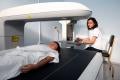

Childhood cancer in Uruguay: A public–private partnership that delivers equity, science, and results

Pediatric cancer poses a public health challenge, especially in low- and middle-income countries. Uruguay, a high-income country, has achieved an overall 5-year survival rate of over 79.6% among pediatric patients. The clinical results exceed the 60% target set by the World Health Organization (WHO)’s Global Initiative for Childhood Cancer (GICC). The model is fully aligned with WHO’s CureAll strategy, emphasizing universal coverage at no cost to the patient and the integration of psychosocial support.

Vaccination Coverage Quality Indicators (VCQI): a flexible open-source tool for survey data analysis

The World Health Organization (WHO) and Pan American Health Organization (PAHO) make statistical software scripts freely available to conduct standardized analysis of vaccination coverage surveys. The software and accompanying documentation are named the Vaccination Coverage Quality Indicators (VCQI). The software examines data from child vaccination records and caregiver recall to calculate indicators of vaccination access, coverage, continuity, and quality.

Assessing vaccination coverage quality in Jamaica during COVID-19 using vcqiR: insights from the 2022 MICS

Objective. This analysis aimed to identify the underlying causes of gaps in routine immunization coverage observed during the COVID-19 pandemic recovery phase by applying the open-source Vaccination Coverage Quality Indicators package in R (vcqiR), addressing limitations in Multiple Indicator Cluster Surveys (MICS) that often omit quality metrics based on detailed vaccination date analysis. 

Factors associated with laboratory confirmation of suspected hantavirus pulmonary syndrome in southern Argentina: a retrospective observational case–control study

Objective. To identify demographic, occupational, exposure, clinical, and laboratory factors independently associated with diagnostic confirmation of hantavirus infection by RT-PCR or IgM among patients with suspected hantavirus pulmonary syndrome evaluated in Río Negro and Neuquén, Argentina. 

Reinforcing measles control in the Americas amid mass gatherings: detection, response, and traveler health implications

17 JUNE 2026, WASHINGTON, D.C. — More than 184 000 suspected measles/rubella cases have been reported worldwide in 2026, reflecting widespread transmission across all WHO regions. In the Americas Region, confirmed cases have reached 20 521 by EW 20 -- with 25 deaths -- representing a four-fold increase from the number reported in the same period in 2025. Against this backdrop, mass gatherings and cross-border travel act as amplifiers of transmission, particularly in populations with suboptimal vaccination coverage.

Latest articles