







Economics of tobacco control

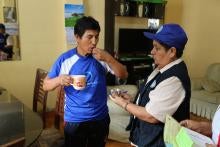
Though the devastating health effects of tobacco use are well known, tobacco’s negative repercussions extend well beyond the obvious health outcomes. Tobacco consumption creates a significant economic burden on societies because of both the high costs of health care and the associated lost productivity. In addition, tobacco use contributes to health inequalities and exacerbates poverty within and between countries through the diversion of resources away from food and other essential needs as well as through foregone income.

Climate change

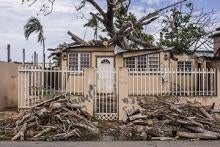
Rapid climate change poses direct and unprecedented challenges to human health on a global scale. These include the burden of disease from environmental risks—expected to rise steadily over the coming years—and direct and indirect effects on human health due to disruptions and shifts in services provided by ecosystems.

Nutrition

Recent decades have witnessed major and alarming changes in nutritional status and trends at the global level. These include a double burden of disease in which some 50 million children under age 5 suffer from wasting or acute malnutrition while 41 million others are overweight or obese. In the Americas, trends similar to, and in some cases worse than, those include high rates of childhood anemia and stunting alongside obesity rates as high as 20-25% in children and adolescents.

International Health Regulations, Ebola, and emerging infectious diseases in Latin America and the Caribbean

The World Health Organization’s determination of the Ebola virus disease outbreak as a public health event of international concern prompted non affected countries to implement measures to prevent, detect, and manage the introduction of the virus in their territories. The outbreak provided an opportunity to assess the operational implementation of the International Health Regulations’ core capacities and health systems’ preparedness to handle a potential or confirmed case of Ebola virus disease.

Tuberculosis

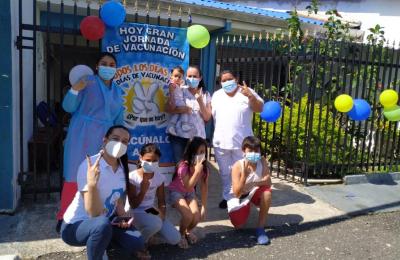
Tuberculosis (TB) continues to be an important global health problem despite significant progress since the declaration of TB as a global public health emergency by the World Health Organization in 1993. In the Region of the Americas, great progress has been made since the implementation of the Directly Observed Treatment Short Course (DOTS) Strategy in the 1990?s, and later by its successor Stop TB Strategy in 2006. However, despite progress toward TB control in the Region, challenges remain.

Unravelling R0: Considerations for Public Health Applications

We assessed public health use of R0, the basic reproduction number, which estimates the speed at which a disease is capable of spreading in a population. These estimates are of great public health interest, as evidenced during the 2009 influenza A (H1N1) virus pandemic. We reviewed methods commonly used to estimate R0, examined their practical utility, and assessed how estimates of this epidemiological parameter can inform mitigation strategy decisions.

Latest articles